
Designing a Corner Shower with Mosaics


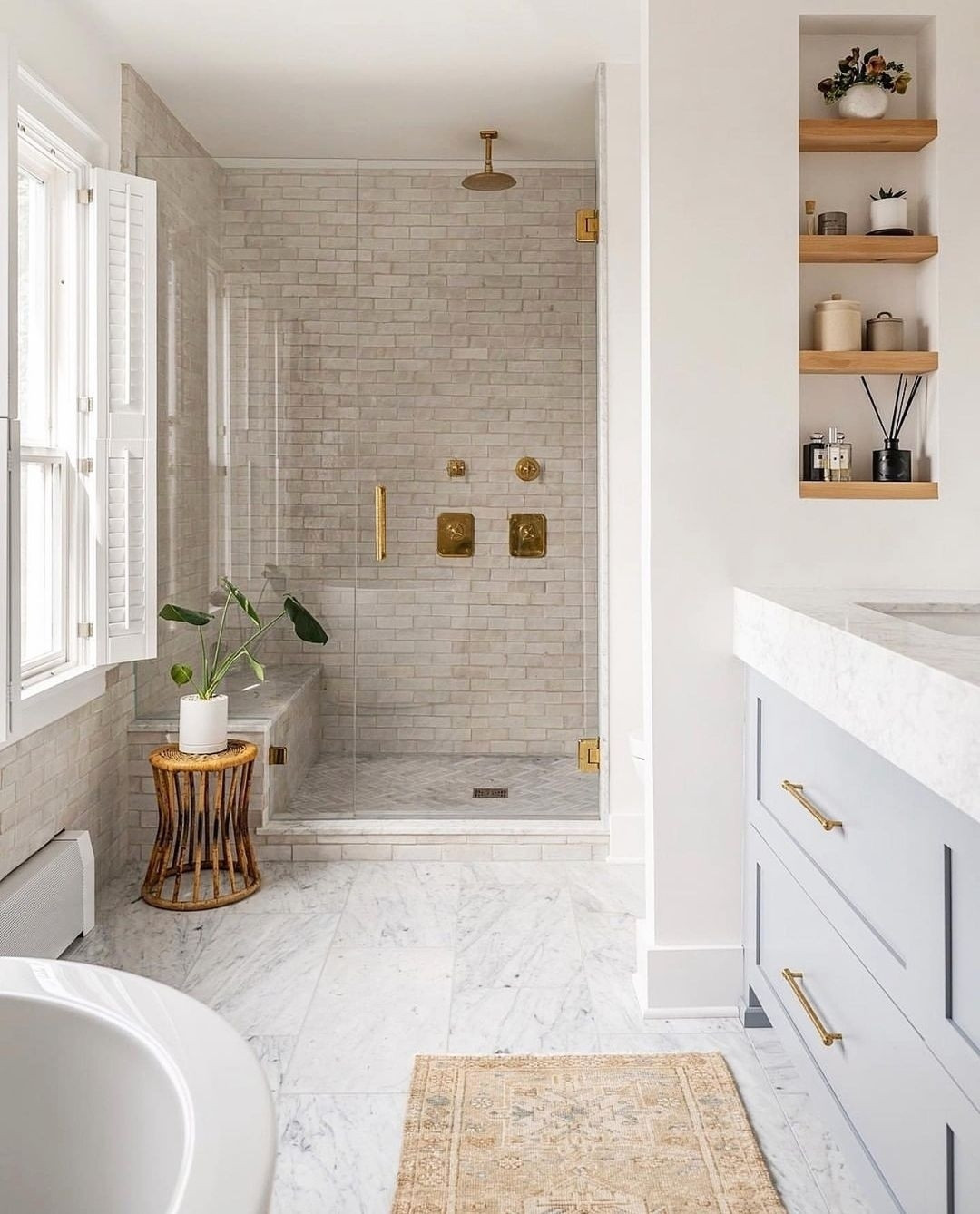
Make the most of your layout
Corner showers are often chosen for their space-saving qualities, but not all corners are created equal. Consider how the shower will sit within the overall flow of the bathroom. Will it interfere with doors, vanities, or storage units? Quadrant enclosures, for example, soften the footprint with curved glass, making them ideal for tighter spaces. Square or rectangular enclosures, on the other hand, offer a more modern, angular look and often provide a bit more internal room.
Choose the right enclosure and access point
The type of door you select can significantly affect usability. Sliding doors are practical in confined spaces, while hinged doors may suit larger bathrooms where clearance isn’t an issue. Frameless glass enclosures are a popular choice for contemporary homes, as they allow light to pass through freely and create a more open feel—particularly important in smaller bathrooms where visual space matters.
Think carefully about drainage and gradients
In a corner shower, water flow needs to be meticulously planned. The gradient of the floor should direct water efficiently towards the drain without pooling. This is especially important if you’re opting for a walk-in or barrier-free design. Poor drainage can quickly undermine even the most beautiful installation, so it’s worth investing in proper waterproofing and professional installation.
Lighting and ventilation matter more than you think
Corners can sometimes feel darker or more enclosed, so good lighting is essential. Recessed ceiling lights or strategically placed wall lights can make the space feel brighter and more inviting. Ventilation is equally important—without it, moisture can build up quickly, leading to mould and long-term damage. An effective extractor fan is a must, particularly in smaller or windowless bathrooms.
Material selection: where mosaics shine
One of the most impactful decisions you’ll make is your choice of surface materials—and this is where mosaics truly come into their own in a corner shower setting.
Mosaics offer a practical advantage due to their smaller tile size. Because they are mounted in sheets made up of many individual pieces, they naturally accommodate the subtle slopes and gradients required for proper drainage. This makes them particularly well-suited for shower floors, where larger tiles can struggle to conform without awkward cuts or uneven surfaces.
From a safety perspective, mosaics also provide more grout lines, which increase slip resistance underfoot—an important consideration in any wet area. But beyond practicality, they open up a world of design possibilities. In a corner shower, where space is often limited, mosaics can add texture, depth, and visual interest without overwhelming the room.
Whether you opt for glass, natural stone, or porcelain mosaics, they can be used to create a feature wall, define the shower zone, or seamlessly blend the floor and walls for a cohesive look. Subtle tonal variations can soften the corner, while bolder patterns can turn the shower into a focal point.
Keep maintenance in mind
While aesthetics are important, durability and ease of maintenance should not be overlooked. Choose materials that are resistant to water, staining, and daily wear. Ensure grout is properly sealed, especially when using mosaics, to maintain both appearance and hygiene over time.
A corner shower, when thoughtfully designed, can strike the perfect balance between efficiency and elegance. By paying attention to layout, materials, and technical details—and by making smart choices like incorporating mosaics—you can create a space that feels both practical and beautifully considered.